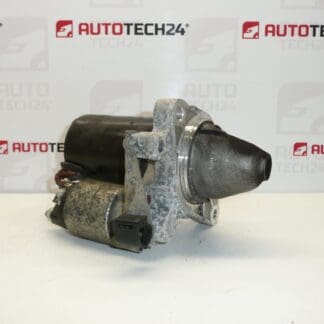
Lambda Sensor 1.0i Citroën Peugeot 1618Q5

30.00

Stellantis Citroën Peugeot
1618Q5

4 in stock

SKU: 3032-AL10_K15 Categories: , , , Tag:

Description

Lambda Sensor 1.0i CITROËN C1 PEUGEOT 107, Upstream (Before Catalytic Converter), 4 Pins.

High-quality replacement Lambda Sensor (Oxygen Sensor) designed for 1.0i Citroën C1 and Peugeot 107 applications. This upstream (pre-catalyst) sensor with a 4‑pin connector restores accurate exhaust oxygen measurement for proper engine fueling and emissions control. Ideal for professional workshops and experienced DIY mechanics who need a reliable OE-fit part (1618Q5) to clear rich/lean running symptoms, improve fuel economy and reduce emissions.

Technical Information

  • Manufacturer: Stellantis / Citroën / Peugeot
  • Model: Citroën C1 (1.0i), Peugeot 107 (1.0i)
  • Product Codes: 1618Q5
  • Other Numbers:

Function

The Lambda (Oxygen) Sensor monitors the oxygen content in the exhaust gases upstream of the catalytic converter and sends a voltage signal to the engine control unit (ECU). The ECU uses this signal to adjust air–fuel ratio for efficient combustion. A 4‑pin sensor indicates an integrated heater circuit plus signal/ground connections, allowing the sensor to reach operating temperature quickly and deliver accurate readings shortly after engine start.

How Replacement Is Performed

Replacement is straightforward for a trained technician or competent DIY mechanic with the right tools:

  • Work on a cooled exhaust system and safely raise the vehicle to access the exhaust manifold/downpipe area.
  • Disconnect the sensor electrical connector and inspect wiring for damage or corrosion.
  • Remove the old sensor using an oxygen sensor socket or appropriate wrench. Apply penetrating lubricant if the sensor is seized, allowing time to soak.
  • Compare the new sensor to the old unit to confirm connector and thread compatibility.
  • If the new sensor is not pre-coated, apply a small amount of anti‑seize to the threads (avoid getting anti‑seize on the sensor tip or heater terminals).
  • Install and tighten the sensor to the manufacturer’s specified torque, reconnect the electrical connector and lower the vehicle.
  • Clear any stored fault codes and perform a test drive to allow the ECU to adapt to the new sensor signal.

Installation Recommendations

  • Always work with the engine cold to avoid burns. Use proper jack stands or a lift—never rely on a jack alone.
  • Use an oxygen sensor socket or appropriate tool to prevent damage to the sensor hex and wiring.
  • Inspect and secure the wiring harness and connector to prevent chafing or contact with hot components.
  • Avoid excessive force when disconnecting or connecting the electrical plug; check pins for corrosion and secure fit.
  • If fault codes persist after replacement, review wiring and grounds; perform a live data check to confirm the sensor switches correctly between rich and lean conditions.

Why This Part Most Commonly Fails

  • Contamination From Oil, Coolant Or Fuel: Oil or coolant leaks and unburnt fuel can coat the sensing element and degrade its response.
  • Thermal And Mechanical Stress: Repeated heating/cooling cycles and vibration shorten sensor life or crack the sensing element.
  • Wiring And Connector Damage: Corrosion, broken wires or poor connections result in faulty signals or intermittent operation.
  • Exhaust Leaks Or Engine Problems: Exhaust leaks upstream of the sensor or issues causing abnormal combustion can lead to premature failure.

Opting for a correct-fit Lambda Sensor 1618Q5 ensures proper integration with the engine management system and helps restore drivability, reduce emissions and maintain fuel efficiency on Citroën C1 and Peugeot 107 1.0i models.

Additional information

Weight 0.5 kg