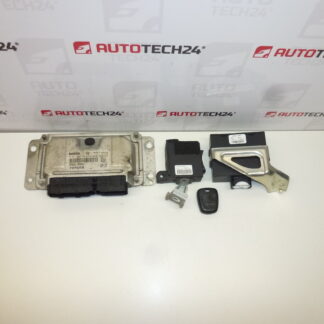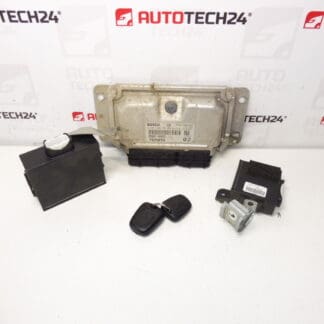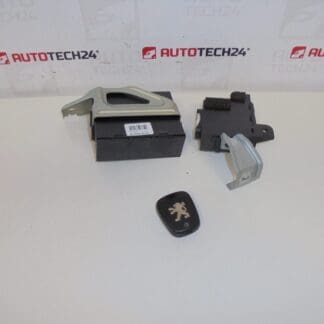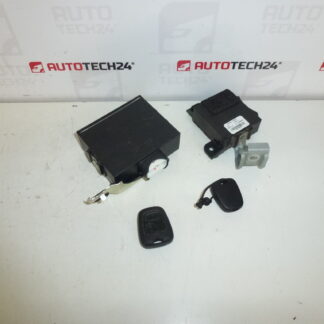
Description
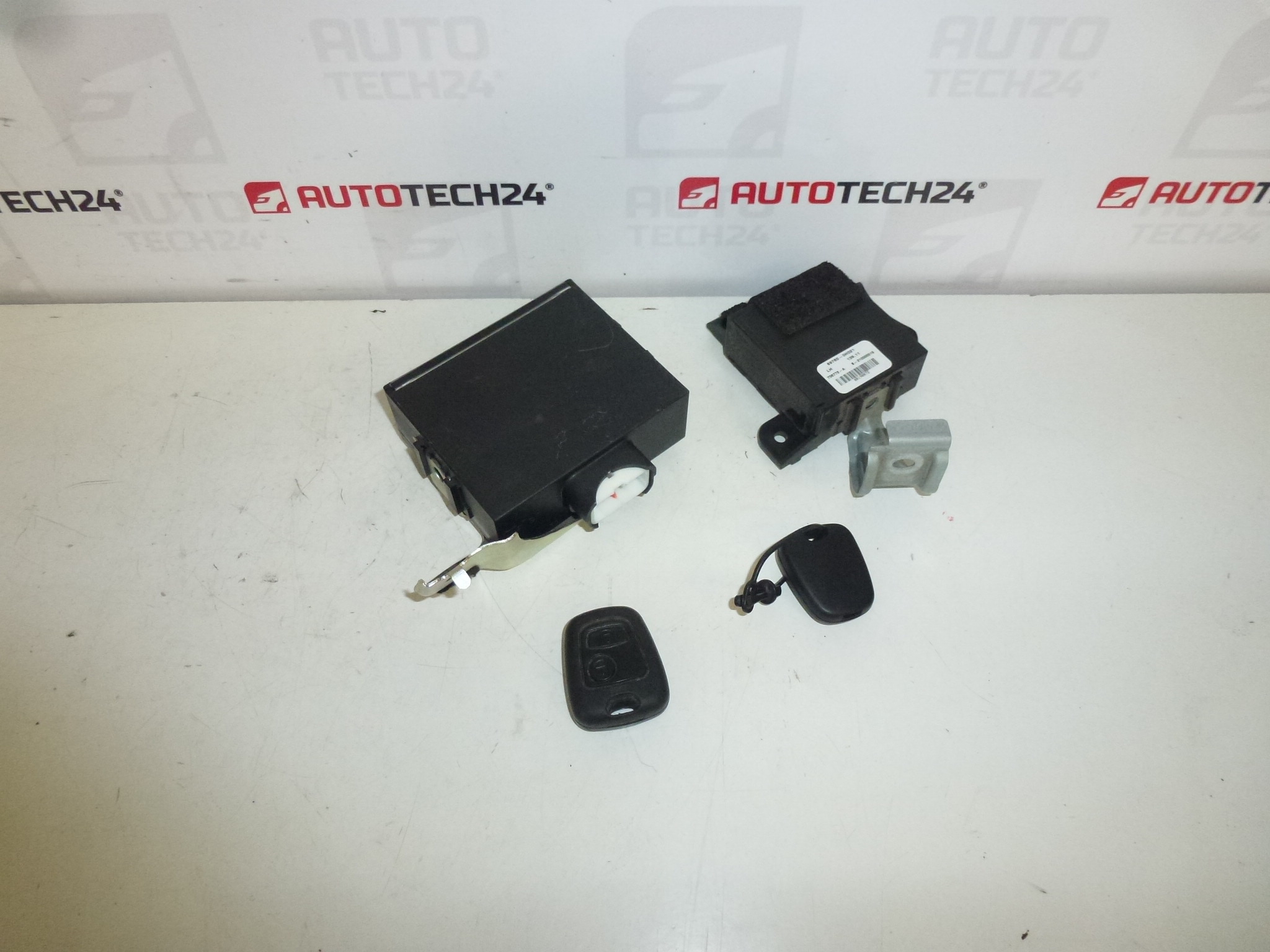
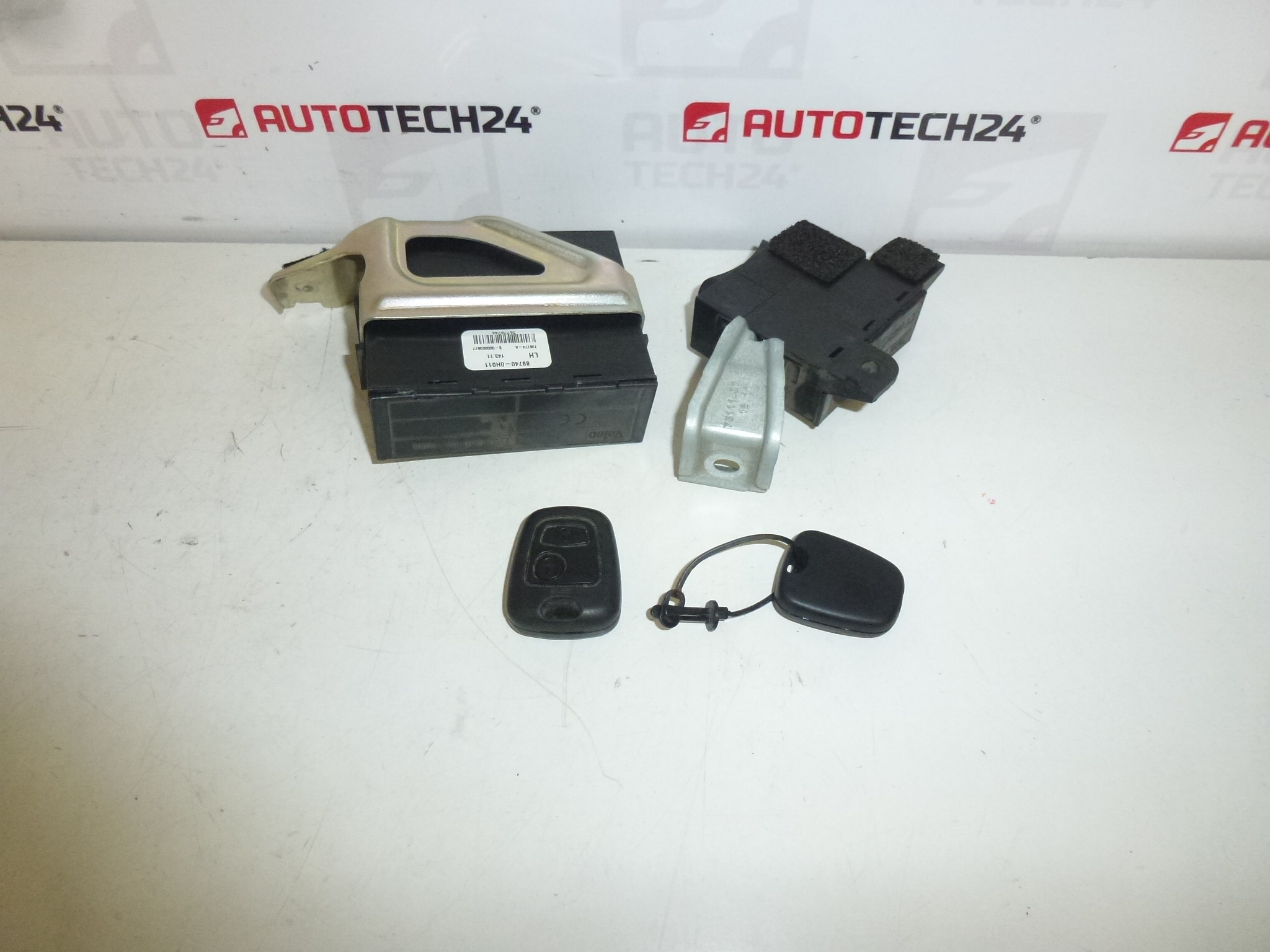
Set of immobilizer unit, central locking and 2x key fobs with transponder chip. Completely paired together from one vehicle; the engine control unit from your car must be loaded into the system via diagnostics.
Overview
This kit contains the vehicle immobilizer/central locking module together with two working transponder key fobs suitable for Citroën C1 and Peugeot 107. The components are already matched to each other from a single donor vehicle, which simplifies integration with the vehicle body and locking system. To complete the installation, the engine control unit (ECU) from the recipient vehicle needs to be programmed or its data transferred by diagnostic equipment.
Function And Typical Symptoms
The immobilizer unit prevents the engine from starting unless a recognised transponder key is present. The central locking module controls door locking/unlocking and communicates with the key fobs. Common symptoms indicating a faulty unit or mismatch include: engine does not crank or starts then cuts out, immobilizer warning light on the dash, remote locking/unlocking does not respond, or intermittent lock operation.
Replacement Procedure
Basic replacement steps for experienced technicians or competent DIYers:
- Disconnect the vehicle battery before any work to avoid short circuit or damage to electronics.
- Locate the immobilizer/central locking unit (position varies by model; typically behind the dashboard or within the steering column / central console area).
- Remove surrounding trim and fasteners to access the module, unplug electrical connectors and remove the unit.
- Install the replacement unit, connect harnesses and secure fasteners. Refit trims.
- Perform required diagnostic procedures to load or clone ECU/key data so the engine control unit recognises the new immobilizer/locking set.
How Often It Fails And Why
Failure intervals vary widely. Common causes of malfunction include corrosion or water ingress, connector or wiring faults, physical impact from accidents, internal electronic faults such as failed components or cracked solder joints, and key fob battery depletion. Environmental exposure and electrical surges are frequent contributors to premature failure.
Technical Information
- Manufacturer: Stellantis / Citroën / Peugeot
- Model: Citroën C1, Peugeot 107
- Product Codes: 6545PN, 6545PR, 1608508080, 89780-0H021, 89740-0H011
- Additional Numbers: 89740-011 (variant), 6545PR, 6545PN
Installation Recommendations
Carry out installation in a dry, static-free environment. Always disconnect the battery before removing or installing control units and follow the vehicle manufacturer’s service procedures. For key fobs, check and replace the internal battery if remote range is poor. After mechanical installation, a diagnostic session is required to integrate the engine ECU and immobilizer data or to perform cloning/initialization.
Why This Part Most Often Fails
Electronics in locking and immobilizer units are sensitive to moisture and mechanical stress. Repeated exposure to humidity, water leaks, or vibrations can cause connector corrosion and internal component failure. Additionally, improper jump-starting or electrical faults can damage the unit. Wear and tear of key fobs (buttons, battery) also leads to perceived failures of the locking system.
Installation And Coding – Important
– The unit is matched to the donor vehicle and is paired with the original car (VIN/PIN/Keys).
– Options to bring the unit into operation:
1) Cloning data from the old unit (EEPROM/Flash) – after cloning the unit is plug and play.
2) Virginisation and subsequent initialization/telecoding via DiagBox (or online) + key adaptation.
– Recommended to be performed by a professional with PSA service equipment (DiagBox/Lexia/PP2000).
– Always disconnect the battery before disassembly/assembly and follow the manufacturer procedure to avoid damaging the unit.