Description
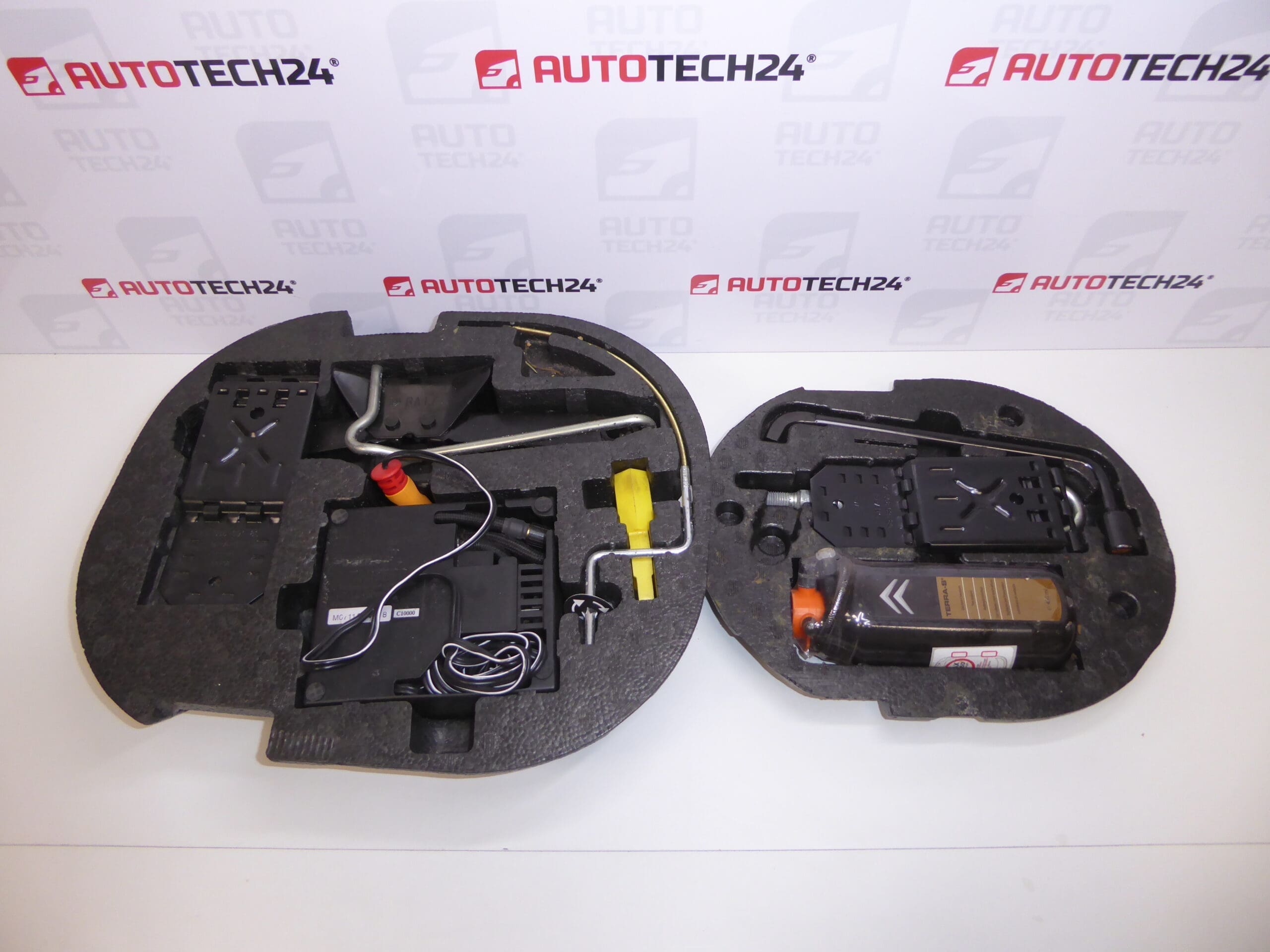
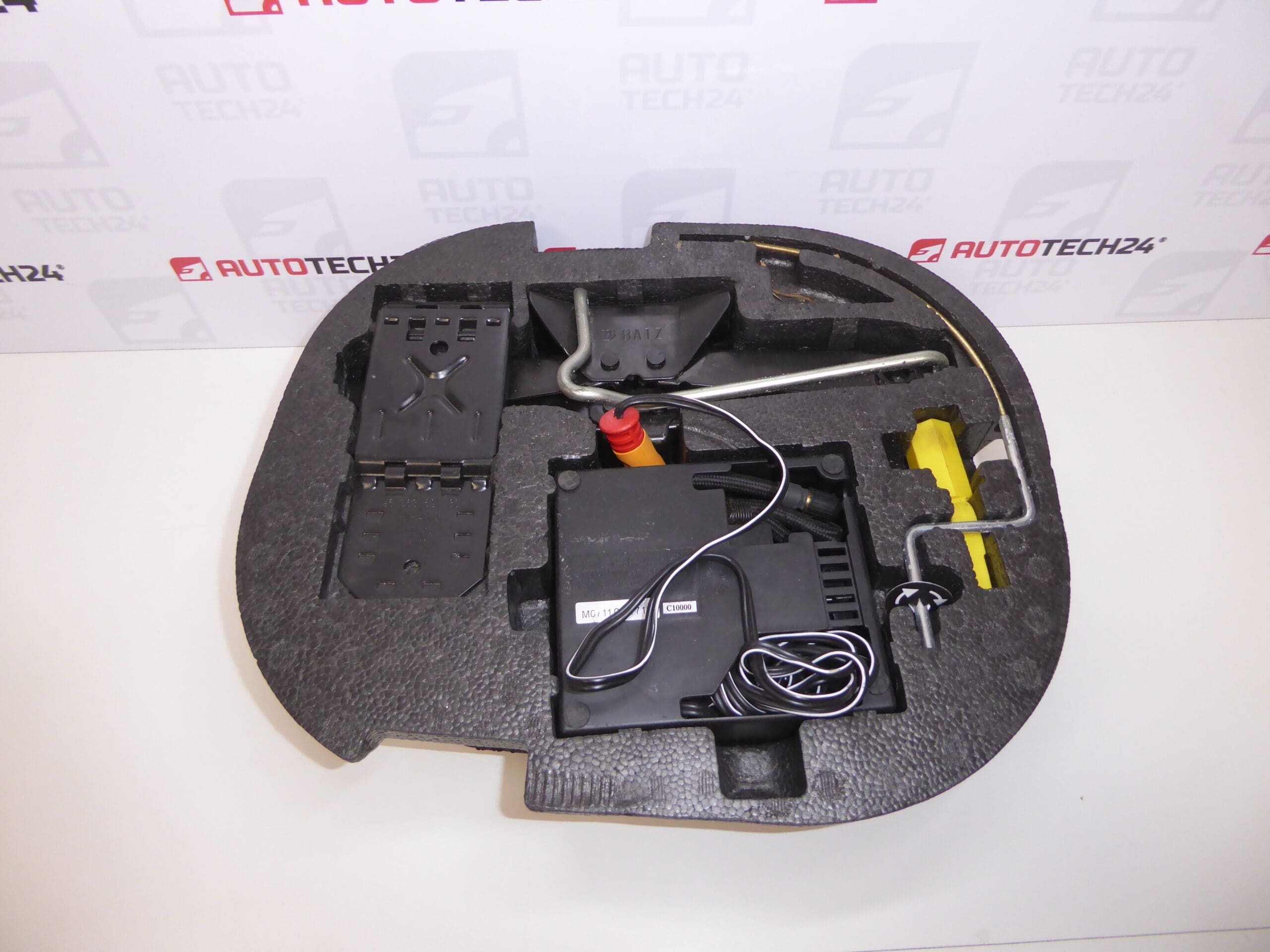
Tool kit: jack, wheel wrench, towing eye, wheel chock for first-generation CITROEN C4 PICASSO vehicles
Includes tool for releasing the electronic parking brake
Includes compressor 9816284980
Part description
This used tool kit for the Citroën C4 PICASSO first generation is a practical choice for replacing missing vehicle equipment. It contains a jack, wheel wrench, towing eye, wheel chock, tool for releasing the electronic parking brake, and a compressor. The individual tools can be used for servicing or in emergency situations, always in accordance with the vehicle manufacturer’s instructions.
The advantage is that you can obtain the listed equipment in one kit instead of sourcing each item separately. When choosing, compare the product numbers and tool design with the original equipment in your vehicle. The compressor is identified in the documentation by number 9816284980.
Technical information
- Manufacturer: not specified; the documentation lists the designation Stellantis CITROEN PEUGEOT.
- Model: Citroën C4 PICASSO – first generation.
- Category: Tool kits.
- Condition: used car parts.
- Listed kit contents: jack, wheel wrench, towing eye, wheel chock, tool for releasing the electronic parking brake, and compressor.
- Compressor number: 9816284980.
- Other numbers: 6736A7, 674418, 672594, 671809, 671739, 671747, 6736G2.
Product codes
Product codes: 9816284980, 6736A7, 674418, 672594, 671809, 671739, 671747, 6736G2.
Model: Citroën C4 PICASSO.
Number 9816284980 is explicitly listed for the compressor. The documentation does not specify which of the other codes correspond to individual kit components.
Installation recommendations
In general, the following applies to this type of equipment: this is not a standard installation of a fixed part, but rather an inspection, safe storage, and proper use of the tools. The exact storage method, vehicle lifting procedure, use of the towing eye, and release of the electronic parking brake depend on the specific vehicle version and must comply with its owner’s manual.
1) Before installation
- Compare the kit contents with the original equipment, especially the shape and dimensions of the wrench, the design of the jack, the towing eye thread, and the compressor connection.
- Check for cracks, deformation, corrosion, damaged threads, and wear on working surfaces.
- Inspect the compressor cable, connector, hose, and nozzle. Do not use damaged equipment.
- Make sure you have the vehicle owner’s manual and the compressor operating instructions.
2) Tools and materials required
Work gloves, a flashlight, and a clean cloth are usually sufficient for inspection and storage. If lifting the vehicle, use suitable wheel restraints and safe supports. Never work under a vehicle supported only by a jack.
3) Step-by-step installation procedure
- Park on a firm, level surface, switch off the vehicle, and secure it against movement.
- Remove the original tools and inspect the space intended for their storage.
- Compare each component in the supplied kit with the original parts and the requirements in the vehicle owner’s manual.
- Remove loose dirt from the tools and check their condition. Do not use damaged components.
- With no load on the jack, check that its mechanism moves smoothly. Do not use it if it sticks or is deformed.
- Inspect the working surfaces of the wheel wrench and the towing eye thread. Never try to tighten an incorrect thread by force.
- Check the compressor’s power specifications on its label and confirm that they match the vehicle’s available connection. Test its operation only as instructed in the compressor manual.
- Use the tool for releasing the electronic parking brake only in accordance with the manufacturer’s procedure. Before releasing it, make sure the vehicle is securely prevented from rolling.
- Place each component in its corresponding holder or storage compartment so that it cannot move while driving and the cable or hose cannot be pinched.
- Close the storage compartment and check that the tools do not prevent its cover from closing properly.
4) Post-installation checks and function verification
Check that all components are securely stored and accessible for emergency use. Adding the kit does not require a test drive. Check the compressor’s operation according to its manual; switch it off if it makes unusual noises, emits an unusual smell, or has a damaged power lead. Do not test the jack’s safety by applying a load in an improvised manner.
5) Common installation mistakes and how to avoid them
- Choosing based on the model name alone: also compare the codes, design, and interfaces of the individual components.
- Lifting on an unsuitable surface or at an incorrect point: use only the jacking points and procedure specified by the vehicle manufacturer.
- Forcing in the towing eye: first check that the thread is clean and matches.
- Releasing the brake without securing the vehicle: always prevent the vehicle from moving on its own first.
- Tools stored loose: secure every component to prevent it from shifting or being knocked.
Reasons why the part may be damaged
In general, damage to this type of equipment is usually caused by incorrect use, moisture, or unsuitable storage. This is not a description of any defects found in this specific kit.
- Jack: overloading, side loading, an unstable surface, or corrosion of moving parts.
- Wheel wrench: use of the wrong size, incomplete engagement, or excessive force.
- Towing eye: thread damage caused by incorrect installation or use under conditions outside those specified by the manufacturer.
- Compressor: overheating due to operation contrary to the instructions, ingress of dirt or moisture, or damage to the cable or hose.
- Other tools: use for an unintended purpose, drops, and impacts when stored unsecured.