Description
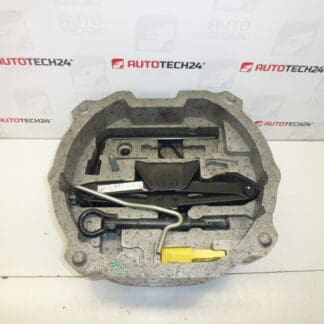
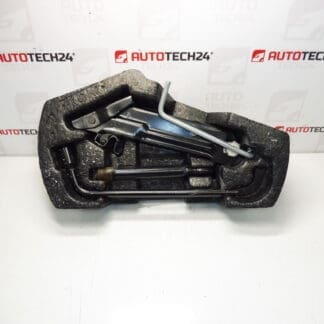
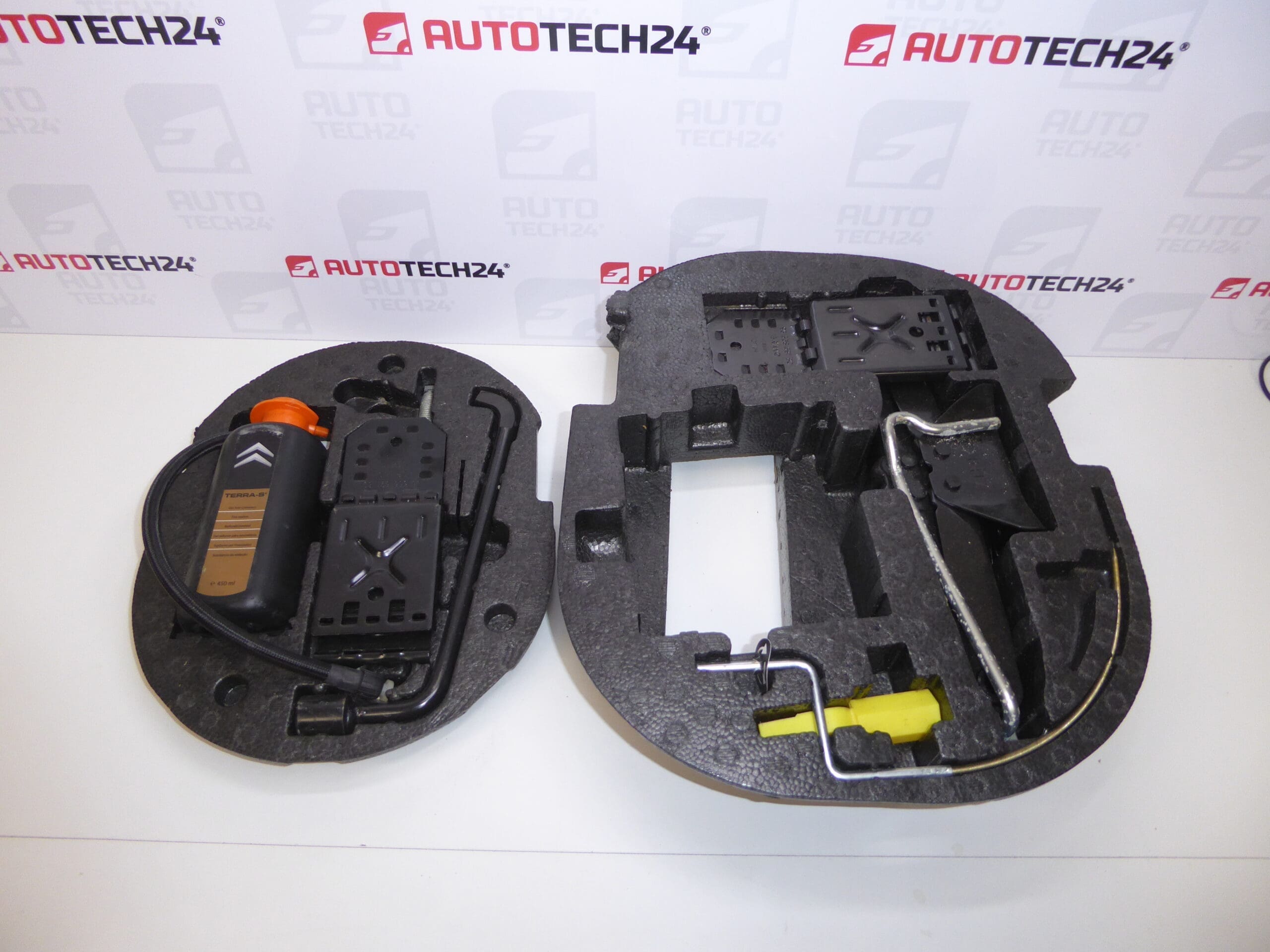
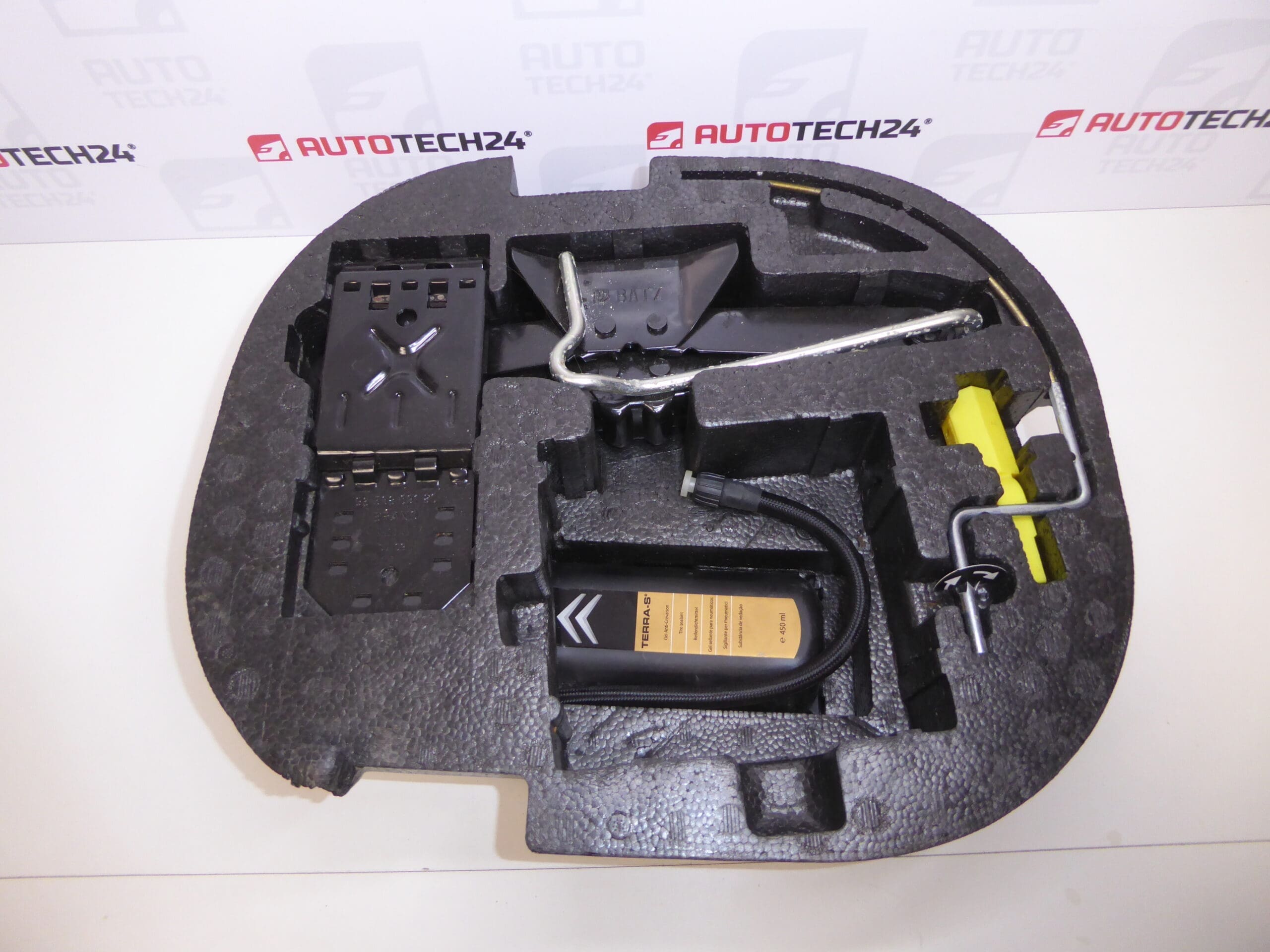
Tool kit: jack, wheel wrench, towing eye, wheel chock for first-series CITROEN C4 PICASSO vehicles
Including the tool for releasing the electronic parking brake
Part description
This used tool kit for the first-series Citroën C4 PICASSO is a practical solution for replacing missing vehicle equipment. It contains a jack, wheel wrench, towing eye and wheel chock. It also includes a tool for releasing the electronic parking brake, which must be used strictly in accordance with the vehicle manufacturer’s procedure.
The kit is useful when preparing to change a wheel and for other emergency tasks appropriate to the individual tools. When selecting a kit, compare the product numbers provided and the design of the tools with your vehicle’s original equipment.
Technical information
- Manufacturer: not specified; the source material lists the designation Stellantis CITROEN PEUGEOT.
- Model: Citroën C4 PICASSO – first series.
- Category: Tool kits.
- Condition: used part.
- Contents according to description: jack, wheel wrench, towing eye, wheel chock and tool for releasing the electronic parking brake.
- Other numbers: not specified.
Product codes
- Product codes: 9816284980, 6736A7, 674418, 672594, 671809, 671739, 671747.
- Model: Citroën C4 PICASSO.
The numbers are listed together for this offer in the source material. Their assignment to specific components of the kit is not specified.
Installation recommendations
In general, the following applies to this type of equipment: this is not a standard installation of a fixed part, but rather an inspection, safe storage and use of the tools. The exact jacking points, brake release procedure, use of the towing eye and storage of the kit depend on the specific vehicle configuration; follow the manufacturer’s manual.
1) Before installation
- Compare the kit contents, available markings and shape of each tool with the original equipment.
- Inspect the jack for deformation, cracks, corrosion and the condition of its moving parts. Do not use a damaged jack or one that does not operate reliably.
- Check the working surfaces of the wheel wrench, the thread and body of the towing eye, and the condition of the wheel chock.
- For the tool used to release the electronic parking brake, verify that it is undamaged and matches the tool specified for the vehicle.
2) Tools and materials required
For a basic inspection and storage, prepare the vehicle manual, work gloves, a flashlight and a cloth for cleaning. Changing a wheel generally also requires a torque wrench for final tightening to the manufacturer’s specification. A jack is not a substitute for safety supports when working under the vehicle.
3) Step-by-step installation procedure
- Refer to the vehicle manual for instructions on emergency equipment, changing a wheel, towing and any emergency brake release procedure.
- Lay out the kit and check each component against the listed contents.
- Remove any dirt that could conceal damage or prevent the tools from fitting properly.
- Compare the design of the tools with the original equipment. Never use force to compensate for a mismatch in the thread or working surfaces.
- With no load on the jack, check that it operates smoothly throughout its normal working range. If it sticks, has excessive play or is deformed, take it out of service.
- Before using the jack to raise the vehicle, park on firm, level ground and secure the vehicle against movement as instructed in the manual. Use the wheel chock as specified by the manufacturer.
- Position the jack only at a jacking point specified by the manufacturer and monitor its stability throughout. Never get under a vehicle supported only by a jack.
- Fit the wheel wrench fully onto the fastener using its entire working surface. When changing a wheel, follow the manufacturer’s procedure and carry out final tightening with a torque wrench to the specified torque.
- Use the towing eye only in the designated threaded mounting point. The thread must engage without force; fully screw in and secure the eye as instructed in the vehicle manual.
- Use the tool for releasing the electronic parking brake only for the appropriate emergency procedure described in the manual. Secure the vehicle against unintended movement before releasing the brake.
- After use, clean and dry the tools and inspect them again. Store and secure the kit in the location designated by the manufacturer so it cannot move while driving.
4) Checks after installation and test drive/functional verification
After storing the kit, check that all components are secured and that nothing rattles loose. Adding the kit itself does not require a test drive. After changing a wheel, check that it is correctly seated and tightened to the manufacturer’s specification. After emergency release of the electronic parking brake, do not resume normal driving until the braking system’s safe operation has been verified in accordance with the service procedure.
5) Most common installation errors + how to prevent them
- Using a damaged jack: check its condition and stability before each use.
- Jacking on an unsuitable surface or away from the designated point: follow the vehicle manual and never work under a vehicle supported only by a jack.
- Forcing the wheel wrench into place or screwing in the towing eye: first check that the design matches and clean the contact surfaces or thread.
- Releasing the brake without securing the vehicle: always prevent the vehicle from moving unintentionally before carrying out the procedure.
- Tools stored loose: secure each component in its designated storage compartment.
Reasons why the part may become damaged
Emergency tool kits are generally damaged primarily through incorrect use, overloading and storage in damp conditions. This is not a description of any defects identified in this particular kit.
- Jack: overloading, lateral stress, an unstable surface or jacking at a point other than the specified one can cause deformation and damage to the mechanism.
- Wheel wrench: incomplete engagement, impacts or excessive leverage can damage the working surfaces or bend the tool.
- Towing eye: dirt in the thread, cross-threading and unsuitable impact loads can damage both the thread and the body of the eye.
- Wheel chock: unsuitable loading, impacts and wear can affect its shape and stability.
- Brake release tool: incorrect fitting and the use of excessive force can bend or damage the working parts.
- Entire kit: moisture, dirt and unsecured storage can cause corrosion, abrasion and damage during transport.